Burned the whole top of my left thumb because I left my soup for too long and it stuck to the pan. Scraping at it resulted in a splash.
Ow shit shit ow.
Burned the whole top of my left thumb because I left my soup for too long and it stuck to the pan. Scraping at it resulted in a splash.
Ow shit shit ow.
I wrote some fluff of my Inquisitor and her girlfriends. Brahda Cadash is asexual and in a romantic poly triad with Cass and Vivienne; Cass and Viv also have a sexual relationship with each other.
In this ficlet, Vivienne finds that Cass and Brahda have been looking at reports for too long and she has to be the responsible one. Again.
Vivienne smiled and shook her head at the the sight before her. Cassandra and Brahda had clearly spent far too much time reading over the papers and books scattered over the table in front of them. Cassandra’s head lay pillowed on one arm, her other arm draped across more papers. Brahda leaned against her, head against the Seeker’s shoulder. The Inquisitor’s mouth was slightly open, and Vivienne heard her snoring softly.
Her lovers were ridiculous, but they were also adorable. She almost hated to wake them. But for the sake of the documents and for the sake their shoulders, necks, and backs, she felt compelled to wake them.
Vivienne stepped around beside Cassandra and trailed an elegant finger along the scar on the Seeker’s cheek cheek until she stirred. Upon awakening, Cassandra sat up suddenly before realizing that Brahda was leaning against her, which sent Brahda tumbling backward off the bench. Cassandra let out a groggily surprised, “Shit!” as Brahda hit the floor.
From the floor Brahda grunted and blinked up at Vivienne and Cassandra. Vivienne was relieved that the dwarf appeared to be fine aside from being a little dazed and freshly awakened.
“…’d I fall asleep?” Brahda asked, making no effort to move from the floor or to move her legs from their new place of being propped against the bench.
“You <i>both</i> fell asleep, darling,” Vivienne replied, arching a brow.
Brahda grunted and rubbed her eyes while Cassandra attempted to straighten the papers on the table. Vivienne placed a hand over Cassandra’s and shook her head. “Leave them. You can look at them again once you’ve slept. Now, to bed with both of you.”
Cassandra stood and stepped over the bench, giving Vivienne a quick kiss before reaching down to help Brahda (who had already started dozing off again) from the floor.
Vivienne clucked her tongue and shook her head. “Whatever shall I do with the two of you?”
Brahda flashed a sleepy but roguish grin and answered, “Love us,” which brought an eye-roll from Cassandra and a laugh from Vivienne.
“I must admit that I do,” Vivienne said. “Now, let’s get you to bed before Cassandra has to carry you, shall we?”
I keep having the problem where I don’t think about at first then suddenly realize that every year of the 1990s is gradually working its way to being twenty years ago.
In March of 2005, I was diagnosed with Type 1 Diabetes (diabetes mellitus). Luckily, because my mother had a job with a unviersity, I had insurance and received excellent healthcare and had excellent control of my blood sugars. When she lost her job, I went on the state insurance plan and since…I think the cost is $500 but I’m not sure. Anyways, yeah please signal boost, if you can’t donate I appreciate any efforts.
Click here to support Insulin Pump Fund by Naomi Waltengus Guebregziabhear

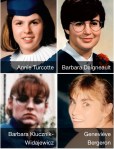
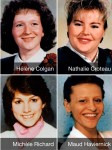

On December 6, 1989, 14 women studying at École Polytechnique in Montreal were gunned down by 25 year old Marc Lépine. 13 others were also shot. 12 of the women were studying engineering, one was a nursing student and the last a female employee.
Today is commemorated as the National Day of Remembrance and Action on Violence Against Women. This tragedy occurred 25 years ago, please take some time today to think of these women.
Congress will soon go home for the year, but first we need the House and Senate to take action in the fight against diabetes.
Take just one minute to tell Congress to fully fund diabetes.
Right now, Congress is back in session and is preparing to make critical funding decisions. We need them to pass legislation providing critical increased resources for diabetes research and programs at the National Institutes of Health (NIH) and the Centers for Disease Control and Prevention (CDC) during Fiscal Year 2015.
Tell your Members of Congress it’s vital they do their part to Stop Diabetes® by passing a bill that fully funds diabetes research and programs. That is the best way to ensure the resources needed to improve diabetes innovation, prevention, and treatment, to prevent the costly complications, and to find a cure.
Nearly 30 million Americans have diabetes and another 86 million people have prediabetes, with those numbers growing every day. If we are going to reverse this epidemic, we must tell Members of Congress today to fully fund diabetes research and prevention programs at the NIH and CDC.
If you’re in the US, please take a moment and do this. Diabetes is no laughing matter.




Sensory Overload and how to cope.
(click on images to zoom)
So important.
I also find I can get SO from thinking too much, like brain-over-stimulation. Though that is kinda like audio input for me because of the way I think. After all, my go-to overload thought is “quiet please, make it stop”.
thank you for posting this, i needed it
[Image Descriptions:
All slides have a light blue background, and the text is written in blue rectangles with rounded corners.
Slide 1: The title is in white text inside a dark blue circle that is centred in the slide.
Sensory Overload And how to cope
Slide 2: The header is in a dark blue rectangle and white text, and the body is in a pale blue rectangle and black text.
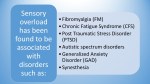
Sensory overload has been found to be associated with disorders such as:
- Fibromyalgia (FM)
- Chronic Fatigue Syndrome (CFS)
- Post Traumatic Stress Disorder (PTSD)
- Autistic spectrum disorders
- Generalized Anxiety Disorder (GAD)
- Synesthesia
Slide 3: The text is in three pale blue rectangles that go horizontally across the slide. All use black text. The last rectangle has four smaller dark blue rectangles with white text inside it for the four points. The text is centred in all of the rectangles.
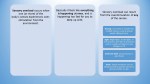
Sensory overload occurs when one (or more) of the body’s senses experiences over-stimulation from the environment.
Basically it feels like everything is happening at once, and is happening too fast for you to keep up with.
Sensory overload can result from the overstimulation of any of the senses.
Hearing: Loud noise or sound from multiple sources, such as several people talking at once.
Sight: Bright lights, strobe lights, or environments with lots of movement such as crowds or frequent scene changes on TV.
Smell and Taste: Strong aromas or spicy foods.
Touch: Tactile sensations such as being touched by another person or the feel of cloth on skin.
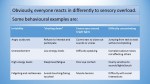
Slide 4: A heading in two light blue rectangles with black text, followed by a table with a dark blue first row that has white text, and then alternating pale blue and white rows with black text. (The table is not really a table, it is just a four-column list.)
Obviously, everyone reacts in differently to sensory overload.
Some behavioural examples are:
Irritability — “Shutting down” — Covers eyes around bright lights — Difficulty concentrating
Angry outbursts — Refuses to interact and participate — Covers ears to close out sounds or voices — Jumping from task to task without completing
Overexcitement — Low energy levels — Difficulty speaking — Compains about noises not effecting others
High energy levels — Sleepiness/fatigue — poor eye contact — Overly sensitive to sounds/lights/touch
Fidgeting and restlessness — Avoids touching/being touched — Muscle tension — Difficulty with social interactionsSlide 5: The header is in a dark blue box with pointy corners and white text. The body is in a pale blue box with pointy corners and black text.
There are two different methods to prevent sensory overload: avoidance and setting limits:
- Create a more quiet and orderly environment – keeping the noise to a minimum and reducing the sense of clutter.
- Rest before big events.
- Focus your attention and energy on one thing at a time.
- Restrict time spent on various activities.
- Select settings to avoid crowds and noise.
- One may also limit interactions with specific people to help prevent sensory overload.
Slide 6: This looks the same as the last slide except the text in the header is black.
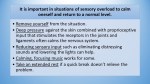
It is important in situations of sensory overload to calm oneself and return to a normal level.
- Remove yourself from the situation.
- Deep pressure against the skin combined with proprioceptive input that stimulates the receptors in the joints and ligaments often calms the nervous system.
- Reducing sensory input such as eliminating distressing sounds and lowering the lights can help.
- Calming, focusing music works for some.
- Take an extended rest if a quick break doesn’t relieve the problem.
Slide 7: Four light blue rectangles with rounded corners, stacked one above the other, with black text.
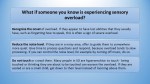
What if someone you know is experiencing sensory overload?
Recognize the onset of overload. If they appear to have lost abilities that they usually have, such as forgetting how to speak, this is often a sign of severe overload.
Reduce the noise level. If they are in a noisy area, offer to guide them somewhere more quiet. Give time to process questions and respond, because overload tends to slow processing. If you can control the noise level, for example by turning off music, do so.
Do not touch or crowd them. Many people in SO are hypersensitive to touch – being touched or thinking they are about to be touched can worsen the overload. If they are seated or are a small child, get down to their level instead of looming above them.
Slide 8: Similar to previous slide, only with three rectangles instead of four.
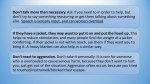
Don’t talk more than necessary. Ask if you need to in order to help, but don’t try to say something reassuring or get them talking about something else. Speech is sensory input, and can worsen overload.
If they have a jacket, they may want to put it on and put the hood up. This helps to reduce stimulation, and many people find the weight of a jacket comforting. If their jacket is not within reach, ask them if they want you to bring it. A heavy blanket can also help in a similar way.
Don’t react to aggression. Don’t take it personally. It is rare for someone who is overloaded to cause serious harm, because they don’t want to hurt you, just get out of the situation. Aggression often occurs because you tried to touched/restrained/blocked their escape.
Slide 9: Similar to previous slide, only with two rectangles instead of three.
When they have calmed down, be aware that they will often be tired and more susceptible to overload for quite awhile afterwards. It can take hours or days to fully recover from an episode of sensory overload. If you can, try to reduce stress occurring later on as well.
If they start self-injuring, you should usually not try to stop them. Restraint is likely to make their overload worse. Only intervene if they are doing something that could cause serious injury, such as hard biting or banging their head. It’s a lot better to deal with self-injury indirectly by lowering overload.
Slide 10: The header is in a dark blue rectangle with white text, and the other text is in a row of five dark blue circles with white text. The text is centred in all shapes.
To summarise – Remember the 5 R’s
Recognise
The symptoms of overloadRemove
Yourself from the situationReduce
the stimulus causing the overloadRelax
Your body and calm yourself downRest
Yourself as you will most likely feel fatigue.]This is important. I have sensory overload quite a bit actually. Most of the time it’s not too severe but sometimes it is.
If a gay/atheist/genderqueer friend is acting straight/religious/cis around family or friends dont fucking say “wait, i thought you said you were _______” this means they haven’t come out and it might not be safe for them
Please please please dont out your friends
Please
Thanks
this feels more relevant around this season
At doctor’s. Stuck listening to what sounds Faux News on the too loud tv.
 Kirkwall Was Totally Built On a Hellmouth