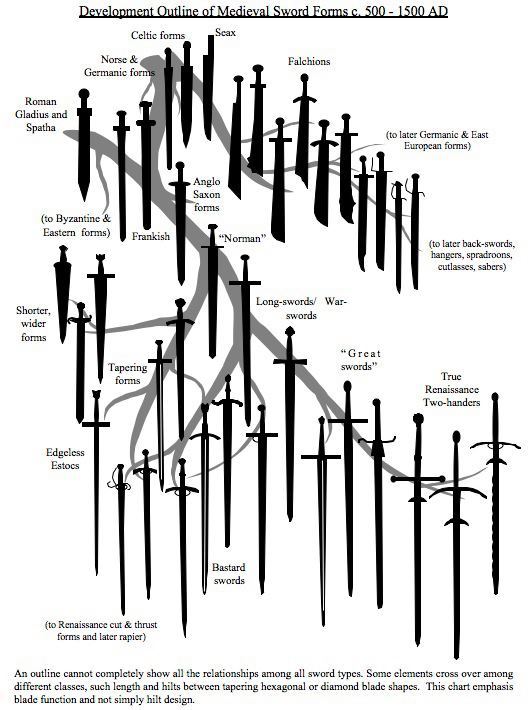
Wow! Anyone know where this is from? I’ve had no luck in my search so far.
From another site I found the image on, it looks like it may be from a book called Medieval Swordsmanship: Illustrated Methods And Techniques.
Wow! Anyone know where this is from? I’ve had no luck in my search so far.
From another site I found the image on, it looks like it may be from a book called Medieval Swordsmanship: Illustrated Methods And Techniques.
2. Least favorite time period
I’ve always disliked the ancient Romans, both Republic and Empire. In large part because of how I learned about the Romans in school, from elementary school to college: as nothing but a series of wars and politics. I find both pretty boring (historically speaking; I…
I got lucky in my experience with Roman History, since it was a month-long summer course on the history of Rome through film. Which means we watched edited clips from HBO’s Rome and MST’d Cleopatra. And the prof gave us the most random historical anecdotes.
Some of my favorite medieval lit.
Reblogging awesome books.
I studied Beowulf twice in undergrad (once in Intro Western Lit I, again in British Lit I, and some comparative stuff with The Eaters of the Dead and The 13th Warrior in an advanced comp class focused on book-to-film adaptations) and it bothered me when people called it boring. There are arms getting ripped off and dragons being slain, that is not boring at all to me.
My Western Lit prof did a great job of emphasizing that the narrative, while recorded by a Christian monk, is an older tale from a Germanic tribal society whose cultural values don’t always mesh with modern perceptions of Christian virtues. When Beowulf lists off all the things he’s accomplished, that’s not “bragging” or “being full of himself”: that’s his resume. If he doesn’t tell it, how is Hrothgar to know that the guy who just showed up is actually a qualified problem-solver? (This is also a big part of my massive dislike for the narrative choices that the CGI Beowulf movie made.)
Brit lit was mostly full of people who didn’t try to “get” the story.
Crows live a long time, and are monogamous. If the male crow dies, the female will never take another mate (compare this to the story of the turtledove). Crows take responsibility for feeding their offspring, and escort their young in flight. The crow’s voice predicts rain, and the crow is said to be able reveal ambushes and foretell the future. Crows lead flocks of storks when they cross the sea to Asia. When the crow finds a corpse, it first pecks out the eye.
Crow, from the Medieval Bestiary (via medievalthedas)
For musical reflection of this eye-pecking, see “The Twa Corbies.” Which is one of my favorite morbid traditional ballads.
 Kirkwall Was Totally Built On a Hellmouth