mar-the-singing-witch:

theabsintheraven:

letitrainathousandflames:

definitelynotaminion:

purplefairydragon7:

gramanderbae:

whiskeyfortheway:

sriusblcks:

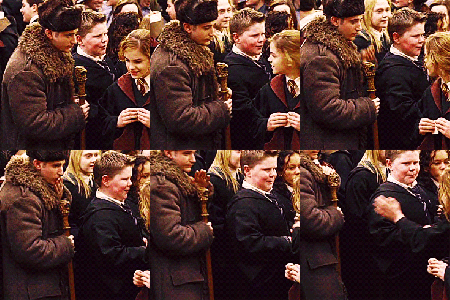
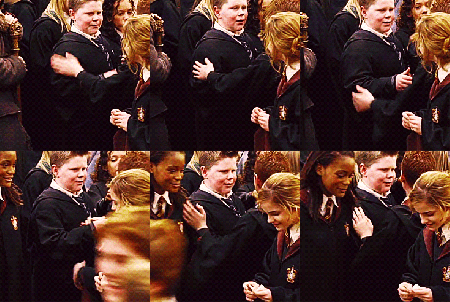
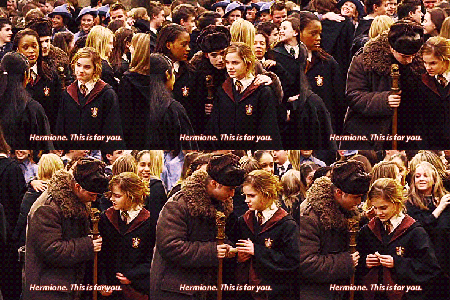
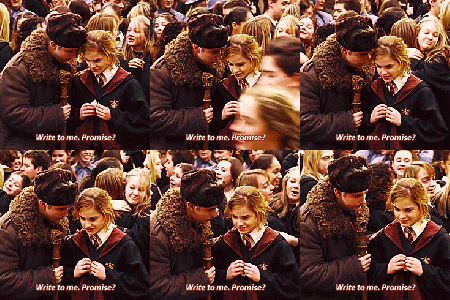
#Viktor was obviously deeply in love with her #just remember the fact that he took her to prom #even knowing that he could’ve choose any other girl #remember how he forgot about everyone and danced with her all night #remember how he looked at her while saying ‘write to me, please’ #remember how, a few years later #on Fleur’s wedding #he danced with her one more time #probably being conscient that her heart already belonged to Ron #this is why I love Viktor Krum so much #he just enjoyed being with Hermione #and didn’t care about the future #mostly, because she wasn’t going to be a part of his.

.

read this guys, read.

Just appreciate him. If for no other reason then because he appreciated Hermione.

Victor Krum was ready to fight Xenophilus Lovegood of all people in the goddamn street because he was wearing the wizard Nazi symbol from ww2. Like no holds barred throw down.

Protect my foreign son and his goodness. Let Victor punch Nazis 2k17

Also in the wedding he told Harry that “that symbol” [the one xenophilus was wearing] would be graffitied here and there in durmstrang by students who “agreed with grindelwald” (neo nazis, in a sense). But victor and his friends kicked their asses to show that kind of thing would not be allowed.

Boy straight up had his own gang of nazi-punching bros, heck yeah

The deathly hallows symbol is equal to the swastika?? What?

I think you mean the dark Mark? But yeah.

That’s why death eater merch is so controversial. They’re literally wizard nazis.

Nope, Krum and a lot of people who lost family to Grindelwald viewed the Hallows symbol the same as Harry & Co viewed the Dark Mark.

From ch 8 of Deathly Hallows:

Krum glowered over the top of his drink, watching Xenophilius, who was chatting to several warlocks on the other side of the dance floor.

“Because,” said Krum, “If he vus not a guest of Fleur’s I vould dud him, here and now, for veering that filthy sign upon his chest.”

“Sign?” said Harry, looking over at Xenophilius too. The strange triangular eye was gleaming on his chest. “Why? What’s wrong with it?”

“Grindelvald. That is Grindelvald’s sign.”

“Grindelwald… the Dark wizard Dumbledore defeated?”

“Exactly.”

Krum’s jaw muscles worked as if he were chewing, then he said, “Grindelvald killed many people, my grandfather, for instance. Of course, he vos never powerful in this country, they said he feared Dumbledore – and rightly, seeing how he vos finished. But this” – he pointed a finger at Xenophilius – “this is his symbol, I recognized it at vunce: Grindelvald carved it into a vall at Durmstrang ver he vos a pupil there. Some idiots copied it onto their books and clothes thinking to shock, make themselves impressive – until those of us who had lost family members to Grindelvald taught them better.”

[…]

“Are you – er – quite sure it’s Grindelwald’s -?”

“I am not mistaken,” said Krum coldly. “I walked past that sign for several years, I know it vell.”

———-

So as far as a lot of people in places Grindelwald held sway in and took over? Yeah, the Hallows sign is essentially a swastika equivalent.

idontevenhaveone:

tahneetalks:

fluffmugger:

thetrippytrip:

We should be more pro-active or we’ll see more of such sad fates of honest people.

And the utterly ironic thing is I’ve seen repeated tumblr posts of that iconic photo absolutely slagging the shit out of Peter Norman as “lol white guy so uncomfortable”   “Why the fuck isn’t he supporting them”, etc etc.

As an Australian this post surprised me. I knew none of the above.

Spreading for Australian awareness ❤

the-ladythc:

the-ladythc:

the-ladythc:

the-ladythc:

Wind and her 6 year old son have been staying with us the last three days. They moved to Colorado from Alabama after Wind left her boyfriend. Initially they stayed with a family member, but that quickly became dangerous and abusive. Said family member ransacked their belongings, taking mostly his clothes (and his teddy), before throwing them out. That evening Wind met a man who let them stay at his place, but he turned out to be even more dangerous! On their way to Walmart they met us and when we learned what they were going through we insisted they stay with us. We live in a bus and this isn’t ideal, but they are at least safe.

Roy has been spending 80% of his day working with Wind’s son doing math, reading, writing, music, science, art, and (of course) LOTS of playtime. He is currently not enrolled in school and Wind is anxious to get him back in, but she doesn’t even know where they are going to end up living!

Wind is signed up to work where roy and I work and she has an appointment with the human resources place downtown that helps us so much. They should be able to get this amazing family into a home asap.

All four of us are living in the bus now. They take the bed while roy and I have an air mattress on the floor.

They have nothing but two little backpacks. They each have about two sets of clothes, a Bible, and their shoes. Neither of them have socks and he has NO toys. He told me his favourite thing to play with is my deck of playing cards.

You can send Wind money directly to her cashapp ($Lakey28B) or you send money to roy and I (paypal.me/roydieud).

Please leave a note with paypal if you want the money to go to Wind.

Check the notes of this post to stay updated. I’ll add a wishlist for school supplies and winter clothes soon, as well as her own PayPal. I don’t have service on my phone so putting this together is taking a while.

This little dude has a wishlist full of school supplies, winter clothes, some toys, and a Spider-Man costume for Halloween. I’ll be adding to it later.

This is everything they have besides the clothes on their backs and the white bag is pretty much just her father’s antique Bible (if you wanna say shit about her having that, you can go ahead and eat shit until you die instead).

I put this together for him out of the things that I have, and he was overjoyed when I gave it to him, but like. Come on. Look at this. This is EVERYTHING he owns in the world that isn’t clothes.

You guys have been keeping gas in our bus all week and food in our bellies. We have enough food for a couple days, but we’re close to running out of gas again.

Wind completed her orientation and her and Roy are keeping one eye on the job list all day for something they can both do.

Wind needs steel toes asap. A cheap pair is about $30, and she can work whenever she wants, as much as she wants, until she can get a permanent job.

We’ve received so much love and encouragement over the last few days, we just need a little bit more material “love” right now.

Thank you thank you thank you all of you (except you, orphanage anon) for the support and kind messages.

If you have any items you want to send us directly, hmu and I’ll give you an address.

Pain Relief is a Human Right

notsorryfeminism:

If you know me personally, you might already know that I have become professionally involved in a foundation (or soon to be foundation once we officially file with the IRS) called the Opioid Education Foundation. I’ve learned a lot in the past few weeks about the origins of what has come to be called an opioid epidemic. At the same time, my sister has become involved in an issue that affects her personally – the reactionary movement against opioids in general, and the resulting denial of essential pain management medications to people who need them to live. And I mean that. There are people who need opioids to live. Because living in horrific pain 24/7 isn’t living, and people will and have committed suicide if that is their only other option.

What I have come to understand, from what I’ve read, hoping that the sources are accurate, is that prescription opioids came about in the early 90s and were marketed as a miracle drug. Incredible pain relief without risk. Safe and non-addictive, they said. “They” being the massive pharmaceutical companies that have made billions of dollars every year these drugs have been on the market. It was a lie. OxyContin is safer than heroin, sure. Safer because they came in controlled-dose pills free of mystery additives like those found in every batch of street heroin. But they are, by nature, addictive.

Every person who takes opioids will become physically dependent on the drug. This means that their brain chemistry changes when they take the drug regularly over a decent period of time. Basically, your brain stops producing its own opioids, which all of our brains do naturally every day, when we’re taking daily doses of a synthetic opioid. The longer you take a synthetic opioid and the higher the dose, the more your brain is altered in response. If you stop, withdrawal symptoms appear because you are suddenly totally devoid of any opioids. That is why withdrawal symptoms for opioids include pain. You will just hurt, because the natural opioids produced by your brain are absent. Thankfully, the brain will go back to normal and start producing the right amount of opioids again over time. But it can take weeks.

Some people who take opioids will also become addicted to them. Addiction is different from physical dependence. Addiction is a chronic brain disease. There is a psychological component and a neurobiological component to this disease, and it can’t be cured, only managed. Why some people become addicted and others don’t has something to do with genetics and also something to do with environment. There have been experiments done that suggest that misery can fuel addiction – that happy, safe, and fulfilled beings will not develop addictions even to substances like heroin.

What I’m getting at is the “opioid epidemic” is a capitalist creation.

First, the desire for obscene profits that no one needs inspires some rich assholes to make a drug and lie about it being non-addictive, then pay doctors to prescribe it as much as possible. They market it aggressively as safe and awesome and then act surprised when people start using it to get high. They do this in a system that produces obscene amounts of suffering, and then act surprised when people become addicted to the feelings of peace and happiness these drugs offer.

What this creates is an addiction epidemic and an overdose epidemic, fueled largely by heroin and also fentanyl, which is an intensely potent opioid meant for the most intense cases of chronic pain, but added to batches of heroin to make a better high. But fentanyl’s potent nature means that adding just a tiny bit more than you should can be fatal.

People start dying at alarming rates. Overdose deaths were a statistic every year, but starting around 2012, the line graphs spiked upward. This scares people, and the family members of the dead demand justice. Pharma companies get sued, but the lawsuits don’t put a dent in their profits.

Then some people with good intentions start campaigns, and some politicians jump on board, probably mostly because they see an opportunity for political gain. Everybody forgets about chronic pain patients. Restrictions on opioids come out rapidly and doctors become afraid of losing their medical licenses. Today, we’re seeing people getting cut off from medications they’ve used for years without overdosing or at all misusing them. We’re seeing people who just got surgery or coming into the emergency room with horrible injuries given fucking Tylenol.

I have tension headaches that laugh at Tylenol. I don’t have to take opioids, but before cannabis was legalized in the state of Washington, I was feeling pretty miserable sometimes.

Also, cannabis is not the solution to all of this. Severe chronic pain laughs in the face of cannabis.

My sister has severe endometriosis. She’s gone to the doctor practically begging for something to dull her pain. Recently, she literally had a doctor look her in the eye and say “I am not going to let you become addicted to opioids.”

Here’s the fucked up thing. My sister is not prone to addiction. She quit cigarettes without too much trouble, and some studies say that nicotine is more addictive than heroin. She’s also taken opioids before. Hell, most of us have. Before the opioid hysteria, I was prescribed Vicodin when I was barely an adult for things like post-wisdom teeth surgery pain. I didn’t request it, nor did I need it. And maybe that was a problem. Maybe it should not have been given to me in that situation. I did, however, need it when I had a weird cyst on my ass in college that ended up needing to be lanced. That hurt like hell. The hydrocodone they gave me helped me get through the aftermath.

Did I try to use the rest to get high? You bet I did. It didn’t really work.

Now chronic pain patients are saying, and just matter-of-factly, that they might have to kill themselves. Because you can’t just live in severe pain all the time. I’ve felt some severe pain. For me, it stopped. If it never stopped? I’d be dead by now. I have no doubt about that.

Opioids are by no means the best or only solution to pain. But it’s the best solution we have right now, and for many, it’s the only reasonable solution they have. They know about dependence. They know the risk of addiction. And they’re aware of the possibility of long-term damage to their bodies/brains from taking them daily for a longer period of time than anyone has been able to study the effects of opioids. They choose opioids anyway. What choice do they have, really?

If it weren’t for the fact that opioids were pouring cash into the pockets of pharma CEOs, if it weren’t for capitalism holding millions of people back and encouraging others to hold back progress for the sake of profits, I have no doubt that we’d have something much better and safer than opioids by now. But people under capitalism are motivated by profits, and not by making life better for their fellow humans. Those good people who would research and develop medicines only for the good of humanity are denied grants and bullied out of it by pharma companies. How do you make shit tons of money if somebody comes up with a better, safer painkiller? Better to lobby those fuckers out of existence.

Right now, we’re in a shitty spot. People are still dying of overdoses while others suffer horribly without the medications they’ve relied on for years. Capitalism created a problem that can no longer be ignored, dismissed, or covered up. Now drug companies are scrambling to come up with the next magical elixir of false promises that will cause other problems, then blame those problems on the poor.

This won’t stop until capitalism ends. Stop allowing evil people who only care about their own money and power to work a system that so easy to game when you have tons of money and power. Cut them off at the source. End capitalism. http://dlvr.it/Qks03t

elodieunderglass:

moonwyvern:

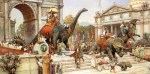
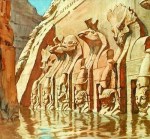
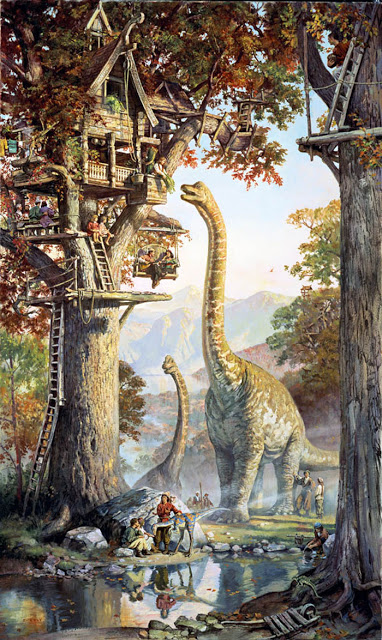
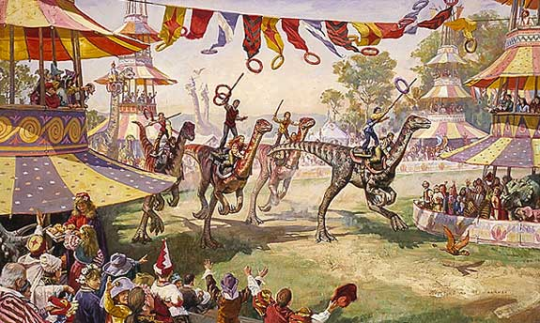
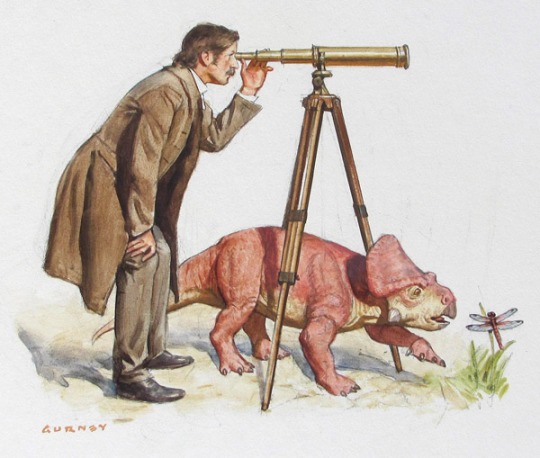
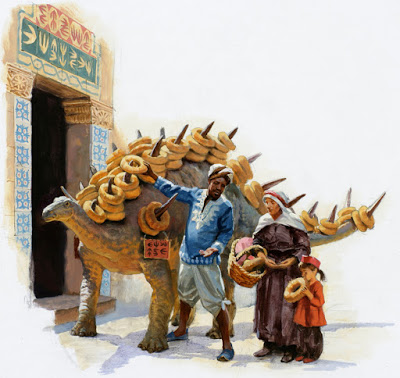
Dinotopia is a fictional utopia created by author and illustrator James Gurney. It is the setting for the book series with which it shares its name. Dinotopia is an isolated island inhabited by shipwrecked humans and sentient dinosaurus who have learned to coexist peacefully as a single symbiotic society. The first book has “appeared in 18 languages in more than 30 countries and sold two million copies.”Dinotopia: A Land Apart from Time and Dinotopia: The World Beneath both won Hugo awards for best original artwork.

God these images still send this ENTIRE thrill through me. They just evoke that feeling of being a child with a book too large for you, staying for so long on a single picture that you feel like you could turn around in it.

Gurney consistently produces a world that feels completely reasonable and real. The color, the light, the relationships between fore- and background,

the fact that it seems like a real world, where people are engaging in perfectly reasonable cultural activities…

The natural gestures, implying the personalities and relationships of characters in a single image…

And it’s quite creative. I mean, look at this pair of bagel sellers. WHAT A GREAT WAY TO SELL BAGELS?

I feel like there is so much to learn from the way Gurney does his work – his blog is here http://gurneyjourney.blogspot.com 

catoncoals:

shoresoftheshadowlands:

somewhereinmalta:

jewishdragon:

rosymamacita:

gokuma:

12drakon:

redgrieve:

lierdumoa:

greenbryn:

whatthecurtains:

cthullhu:

nonomella:

Coraline is a masterfully made film, an amazing piece of art that i would never ever ever show to a child oh my god are you kidding me

Nothing wrong with a good dose of sheer terror at a young age

“It was a story, I learned when people began to read it, that children experienced as an adventure, but which gave adults nightmares. It’s the strangest book I’ve written”

-Neil Gaiman on Coraline

@nightlovechild

This is a legit psychology phenomenon tho like there’s a stop motion version of Alice and Wonderland that adults find viscerally horrifying, but children think is nbd. It’s like in that ‘toy story’ period of development kids are all kind of high key convinced that their stuffed animals lead secret lives when they’re not looking and that they’re sleeping on top of a child-eating monster every night so they see a movie like Coraline and are just like “Ah, yes. A validation of my normal everyday worldview. Same thing happened to me last Tuesday night. I told mommy and she just smiled and nodded.”

Stephen King had this whole spiel i found really interesting about this phenomenon about how kids have like their own culture and their own literally a different way of viewing and interpreting the world with its own rules that’s like secret and removed from adult culture and that you just kinda forget ever existed as you grow up it’s apparently why he writes about kids so much

An open-ended puzzle often gives parents math anxiety while their kids just happily play with it, explore, and learn. I’ve seen it so many times in math circles. We warn folks about it.

Neil Gaiman also said that the difference in reactions stems from the fact in “Coraline” adults see a child in danger – while children see themselves facing danger and winning

i never saw so much push back from adults towards YA literature as when middle aged women started reading The Hunger Games. They were horrified that kids would be given such harsh stories, and I kept trying to point out the NECESSITY of confronting these hard issues in a safe fictional environment.

Also, in an interview, he said that Coraline was partially based on a story his not yet 6 year old daughter would tell him 

SAGAL: No. I mean, for example, your incredibly successful young adult novel “Coraline” is about a young girl in house in which there’s a hole in the wall that leads to a very mysterious and very evil world. So when you were a kid, is that what you imagined?

GAIMAN: When I was a kid, we actually lived in a house that had been divided in two at one point, which meant that one room in our house opened up onto a brick wall. And I was convinced all I had to do was just open it the right way and it wouldn’t be a brick wall. So I’d sidle over to the door and I’d pull it open.

(SOUNDBITE OF LAUGHTER)

SAGAL: Right.

GAIMAN: And it was always a brick wall.

SAGAL: Right.

GAIMAN: But it was one of those things that as I grew older, I carried it with me and I thought, I want to send somebody through that door. And when I came to write a story for my daughter Holly, at the time she was a 4 or 5-year-old girl. She’d come home from nursery. She’d seen me writing all day. So she’d come and climb on my lap and dictate stories to me. And it’d always be about small girls named Holly.

SAGAL: Right.

GAIMAN: Who would come home to normally find their mother had been kidnapped by a witch and replaced by evil people who wanted to kill her and she’d have to go off and escape. And I thought, great, what a fun kid.

It’s anxious adults who desperately want to “soften” stories. Kids prefer the real thing: with monsters, bloodthirsty ogres and evil murderous stepmothers; where the littlest brother always wins and all the villains are horrendously punished in the end. The world is threatening to the eyes of a child, so they need a fictional universe where the little people have a fair chance against the big and strong.

This isn’t specifically about stop motion but it is about how sad or scary parts of movies aren’t really all that bad- IE the 80′s movies, particularly Don Bluth’s films. (X- The Melancholy of Don Bluth, by Meg Shields )

How the children’s animation of the 80’s made room for sadness, and what that taught us. 

There was a time when McDonalds used to give away VHS tapes with happy meals, and by some stroke of luck, one day my mom picked The Land Before Time. It
was the first film to etch itself onto me ‐ the way film tends to with
kids. I would recreate the plot with stuffed animals and parrot the
lines to whoever would listen; I pawed that VHS box until the cardboard
went soft.

A couple years ago, I saw that Land Before Time
was playing on t.v. and couldn’t remember the last time I’d watched it
all the way through. Within five minutes I was completely obliterated
and sobbing into a throw pillow. This is a shared experience for
children raised with Don Bluth: that as a kid, I could only clock a hazy sense that his films felt different
from Disney fare, but that the articulations of this difference, and
their ability to emotionally floor me, are something I’ve only become
aware of in retrospect.

There was a regime change in animation
during the 80’s. Quite literally in the form of Bluth’s official break
with Disney in ’79, but in a more elusive sense with the landscape of
what children’s animation during that decade felt like. For
whatever reason, be it Bluth’s departure or a diseased managerial ethos
in the wake of Walt’s passing, the 80’s were a mixed bag for Disney.
Don’t get me wrong, they’re amiable and charming films, but The Fox and the Hound and The Great Mouse Detective are not classics. And for all its ambition, The Black Cauldron cannot be redeemed on technical merit. Disney would eventually yank itself out of its slump in ’89 with The Little Mermaid ‐ but animation during the 80’s, along with the childhoods of a slew of millennials, were definitively shaped by Bluth.

image

That there is a dark tenor to Bluth’s work has been thoroughly, albeit perhaps vaguely, noted, often citing individual moments of terror (cc: Sharptooth, you dick). While I don’t doubt that frightening and disturbing scenes contribute to an overall sense of darkness in Bluth’s work, I’m unconvinced that they’re at the root of what distinguishes his darker tone. There is, I think, a holistic sadness to Bluth films; a pervasive, and fully integrated melancholy that permeates his earlier work.

These stories are full of crystalline moments of narrative sadness; specific story moments at which I inevitably mutter a “fuck you Don Bluth,” and try not to cry. There’s Littlefoot mistaking his own shadow for his dead mother; Fievel sobbing in the rain (a Bluth mainstay) convinced that his family has abandoned him; Mrs. Brisby shuddering helplessly after she and the Shrew temporarily disarm the plow. Other plot points are less tear-jerking so much as objectively miserable: the cruelty of the humans in The Secret of NIMH; An American Tail’s intelligent allegory for Russian Jewish pogroms and immigration; Carface getting Charlie B. Barkin drunk and murdering him at the pier.

You know — FOR KIDS! 

Thematically, there is an ever-present air of death about Bluth’s work that is profoundly
sad. Bones litter certain set-pieces; illness and age are veritable
threats (shout out to Nicodemus’ gnarly skeleton hands); and characters
can and do bleed. Critically, Bluth films don’t gloss over
grief, they sit with it. From Littlefoot’s straight up depression
following the on-screen death of his mom, to Mrs. Brisby’s soft sorrow
at finding out the details of her husband’s death.

There is a space for
mourning in Bluth’s stories that feels extra-narrative, and
unpretentious. Critically, this is distinct from, say, wallowing.
Bluth’s films have a ridiculously productive attitude towards mourning,
most lucidly articulated through Land Before Time’s moral
mouthpiece Rooter: “you’ll always miss her, but she’ll always be with
you as long as you remember the things she taught you.” Disney
meanwhile, tends to treat death as a narrative flourish, or worse, a
footnote. And in comparison, even notable exceptions like Bambi and The Lion King seem immaturely timid to let palpable grief linger for longer than a scene, let alone throughout a film’s runtime.

Look at all the fun times they’re missing. 

Musically, James Horner and Jerry Goldsmith’s impossibly beautiful scores are laced with a forlorn undercurrent. In particular, Horner’s tonal dissonance in The Land Before Time theme punches the Wagner-lover in me in the throat (admittedly, a good thing). Further to this, the first half of Goldsmith’s “Escape from N.I.M.H,” is reminiscently Tristan and Isolde-y. And while I’m here, I would also like to formally issue a “fuck you for making me cry in public” to American Tail’s “The Great Fire,” which when combined with visuals, is nothing short of devastating.

Speaking of visuals, backdrops of grim and vast indifference dot Bluth’s work; from the twisted Giger-esque caverns of the rats’ rosebush, to the urban rot of a thoroughly unglamorous New York and New Orleans. That these landscapes are in a state of decay is particularly dismal; there is a tangible barrenness, a lack of the warmth our characters are desperately hoping to find by their film’s end. These are depressed and morose spaces ‐ and that they are so seemingly unnavigable and foreboding makes them all the more compelling, and narratively resonant.

image

The way Bluth uses
color is also notable, with dark, earthy tones prevailing throughout
only to be blown out quite literally with the golden light
characteristic of Bluth’s hard-earned happy endings. Before Littlefoot
and friends reach The Great Valley, an event marked by gradually
illuminating god-rays, they must slug it out through the parched browns,
blues and pitch of their prehistoric hellscape. Like Charlie’s final
ascendance into heaven, Fievel must endure similarly muted shades until
he is finally (finally) reunited with his family and soaked in
glitter ‐ a level of Don Bluth conclusion-sparkles perhaps only rivaled
by the radiance of Mrs. Brisby’s amulet as she Jean Grey’s her homestead
to safety at the end of NIMH. Because Bluth leans into darker,
less saturated tones, these effervescent conclusions are all the more
impactful, which speaks in part to the methodology of Bluth’s
melancholy.

The plucky leads of Bluth’s early films are all
fighting for the same thing: family. From Mrs. Brisby’s persistence to
protect her children, to Charlie’s (eventually) selfless love for
Anne-Marie, these are characters in search of home. Invariably, each of
these characters gets their happy ending, but they have to go through
hell to get there, literally in Charlie’s case. In a recent interview,
critic Doug Walker asked Bluth if there was any truth to the rumor that
he thinks you can show children anything so long as there’s a happy
ending, to which Bluth replied:

“[If] you
don’t show the darkness, you don’t appreciate the light. If it weren’t
for December no one would appreciate May. It’s just important that you
see both sides of that. As far as a happy ending…when you walk out of
the theatre there’s [got to be] something that you have that you get to
take home. What did it teach me? Am I a better person for having
watched it?”

Melancholy isn’t just a narrative device
for Bluth, it’s a natural part of navigating life, of searching for
wholeness, and becoming a better person. Bluth acknowledges sadness in a
way that never diminishes or minimizes its existence; he invites
melancholy in, confesses its power, and lets it rest. Sadness is, for
Bluth, an essential characteristic of the world and living in it. That
is a wholly edifying message for kids, delivered in a vessel that is
both palatable and unpatronizing. For this reason, among innumerable
others, Bluth’s work has immense value as children’s entertainment…even
if it means crying into a throw pillow twenty years later.

Autistic Voices: A Masterpost

fidgetcubist:

Here is a list of resources about autism, with a focus on actually autistic voices, divided by topic. You will find articles, websites, videos, Youtube channels, etc., most of them created by autistic people. If there are resources you would like to contribute to this post, or if you have other suggestions, don’t hesitate to let me know.


What is autism?

Nick Walker: What is autism?

Autistic Self Advocacy Network: About Autism

Autisticality: Inclusive autistic traits

Amythest Schaber: Ask an Autistic: What is Autism?

Neurodiversity

Identity-First Autistic: The Neurodiversity Paradigm

Nick Walker: Neurodiversity: some basic terms and definitions

Nick Walker: The Neurodiversity Paradigm and the Path of Self-Liberation

Nick Walker: Throw Away the Master’s Tools: Liberating Ourselves from the Pathology Paradigm

Elisabeth Wiklander: Neurodiversity — the key that unlocked my world

Amythest Schaber: Ask an Autistic: What is Neurodiversity

Identity-first language vs person-first language

Autistic Self Advocacy Network: Identity-First Language

Nathan Selove: Autism ACTUALLY Speaking: Person First Language

Autistic Hoya: The Significance of Semantics: Person-First Language: Why It Matters

Social model of disability vs medical model of disability

Identity-First Autistic: Understanding Disability Models

Autistic Hoya: You are not a burden.

Nathan Selove: Autism ACTUALLY Speaking: Models of Disability Discourse

Nathan Selove: Creating A Social Model of Autism

Ari Ne’eman at Emory University: Autism and the Disability Community: The Politics of Neurodiversity, Causation and Cure

Amythest Schaber: Ask an Autistic #16: Is Autism a Disability?

Functioning labels

Identity-First Autistic: Identity-First Autistic’s stance on ‘functioning labels’

Amythest Schaber: Ask an Autistic: What about Functioning Labels? 

autisticliving: What’s Wrong with Functioning Labels? A Masterpost.

Nathan Selove: Autistic ACTUALLY Speaking: High Functioning versus Low Functioning

AUTISTIC WEREWOLF: WHY LABELS EXPECIALLY HIGH & LOW FUNCTIONING AUTISM IS ARE A LOAD OF CRAP! (cw: use of the R-word)

Thinking Person’s Guide to Autism: The Problems with Functioning Labels

Autistic women

Reese Piper: ‘I Thought I Was Lazy’: The Invisible Day-To-Day Struggle For Autistic Women

Fabienne Cazalis: The women who don’t know they’re autistic

Aspergers from the Inside: Female Diagnosis and Self-Advocacy with Geraldine Robertson

Purple Ella: DIFFERENCES AUTISTIC BOYS AND GIRLS

Seventh Voice: The Gas-lighting of Women and Girls on the Autism Spectrum

 
Suicide

AutisticNomad: Speaking to Suicidal Autistics

Science Daily: Coventry University: People with Autism at Greater Risk of Attempting Suicide

Dan Jones: Autism: Diagnosis Saved My Life

Empathy

Rebecca Brewer and Jennifer Murphy for Spectrum News: People with autism can read emotions, feel empathy

Nathan Selove: Autism ACTUALLY Speaking: Empathy

Luna Lindsey: Double-Standards: The Irony of Empathy and Autism

Intersectional Neurodiversity: New Research Suggests Social Issues Are Down to Neurotypicals More than Autistics

Self-advocacy

Nathan Selove: Autism ACTUALLY Speaking: Self Advocacy

Amythest Schaber: Autistics Speaking: Self-Advocacy in a Culture of Cure

Autistic Hoya: What is Self-Advocacy?


Executive function

Thinking Person’s Guide to Autism: Executive Functioning Problems: A Frustrating Aspect of Being Autistic

Reese Piper: ‘I Thought I Was Lazy’: The Invisible Day-To-Day Struggle For Autistic Women

Amythest Schaber: Ask an Autistic #25: What is Executive Functioning?

Aspergers from the Inside: Executive Function (a response to Ask an Autistic)

Purple Ella: AUTISM AND EXECUTIVE FUNCTIONING

Special interests

Musings of an Aspie: What’s So Special About a Special Interest?

Amythest Schaber: Ask an Autistic #13 – What are Special Interests?

Thinking Person’s Guide to Autism: Autism and Intense Interests: Why We Love What We Love and Why It Should Matter to You

Stimming

Amythest Schaber: Ask an Autistic #1 – What is Stimming?

Amythest Schaber: Ask an Autistic: Living Atypically – Self-Injurious Stims

The Artism Spectrum: Stimming 101, or: How I Learned to Stop Worrying and Love the Stim

The Artism Spectrum: The Dark Side of the Stim: Self-injury and Destructive Habits

Meltdowns

Amythest Schaber: Ask an Autistic #15 – What are Autistic Meltdowns?

Unstrange Minds: The Protective Gift of Meltdowns

Purple Ella: DEALING WITH MELTDOWNS

Shutdowns

Amythest Schaber: Ask an Autistic #20 – What are Autistic Shutdowns?

Unstrange Mind: Autistic Shutdown Alters Brain Function


Passing

AUTISTIC WEREWOLF: ANOTHER WAY AUTISTIC WEREWOLVES HIDE IN THIS NEUROTYPICAL WORLD!

Amythest Schaber: Ask an Autistic #2 – What is Passing?

Autistic burnout

Amythest Schaber: Ask an Autistic #3 – What is Autistic Burnout?

Musings of an Aspie: Autistic Regression and Fluid Adaptation

Autisticality: Burnout

Autism Information Library: “Help! I seem to be Getting More Autistic!”

Inertia

Autisticality: Inertia

Divergent Minds: A Look at Autistic Inertia

Alexithymia

Unstrange Mind: Alexithymia: I Don’t Know How I Feel

Amythest Schaber: Ask an Autistic #27: What is Alexithymia?


What not to say to an autistic person

Autistic Hoya: 15 Things You Should Never Say To An Autistic

Radical Neurodivergence Speaking: What to say, and not to say, to an autistic adult

Nathan Selove: Top 5 Well Meaning Things People Should Stop Saying to Autistics

Amythest Schaber: Ask an Autistic #12 – What Shouldn’t I Say to Autistic People?

StimNation: S#!T Ignorant People Say to Autistics

Actually Autistic: 10 Things Not To Say To Autistic People

BBC Three: Things Not To Say To An Autistic Person


Non-speaking autistic voices

Amy Sequenzia: Non-speaking, “low-functioning”

Mel Baggs: In My Language

Mel Baggs: Don’t ever assume autism researchers know what they’re doing

Sue Rubin’s website

Autism $peaks/Light It Up Blue/Puzzle Piece

The Caffeinated Autistic: New Autism Speaks Masterpost (Updated 4/4/17)

The Caffeinated Autistic: Autism Speaks *still* does not speak for me

Autistic Anthro: Enough with the Puzzle Pieces

Autistic Anthro: Autism Awareness Month

Amythest Schaber: Ask an Autistic #6 – What’s Wrong With Autism Speaks

Nathan Selove: Autism ACTUALLY Speaking: Lighting Up Blue

John Elder Robinson: I Resign My Roles at Autism Speaks

Autistic Hoya: Co-Opting the Movement: Autism Speaks, John Elder Robinson, and Complicity in Oppression

Autistic Hoya: Responding to Autism Speaks


When autism parents don’t listen

Jim Sinclair: Don’t Mourn For Us

Autistic Hoya: They keep publishing these violent articles

Autistic Hoya: Why we must #BoycottToSiri / An open letter to Judith Newman

Amythest Schaber: #BoycottToSiri

Susie Rodarme: An Open Letter to HarperCollins about TO SIRI WITH LOVE

Kaelan Rhywiol: Why I Believe ‘To Siri With Love’ By Judith Newman Is A Book That Does Incredible Damage To The Autistic Community

Aaron Kappel: When You’re Autistic, Abuse Is Considered Love

Thinking Person’s Guide to Autism: Autism Uncensored: A Dangerous and Spirit-Crushing Book


Service dogs and autism

Nathan Selove: Service Dog Tales


In French

Super Pépette – Julie Dachez’s Youtube channel

La Fille Pas Sympa Julia March’s blog

Meta Monday

fangirlunderground:

I got involved in fandom in the mid-90s when I was around 14 years old. My cousin @lyndanaclerio sent me VHS recordings of the Sailor Moon dub, and I fell in love… I’m sure I’ve mentioned this before.

Since then, I’ve been in a lot of different fandoms: from manga to YA, Tolkien to Xena, Harry Potter to Teen Wolf, Star Wars to Marvel, and countless mini-fandoms along the way. And I’ve met a lot of cool people online over the years — older and younger alike, including my best friend of 15 years — on all sorts of platforms. I’ve built myself fandom homes on shitty GeoCities fansites and moderately less shitty sites I made from scratch; on Yahoo! Groups and LiveJournal; on AO3 and Tumblr… and that’s nothing compared to others!

But, last week, I turned 36, and according to some, I’ve already overstayed my welcome in fandom by at least a decade. I guess I’m supposed to put all my comics and collectibles on eBay, swap out my fanfiction with whatever the fuck a beach read is, and spend the rest of my life cloistered in my house where I won’t offend society. (I mean, I’m kind of a hermit, but that’s not why.) 

And let me be clear here: by some, I mean some. While there is indeed a frightening trend here on Tumblr, in which some young people have embraced bizarrely conservative views about women and sexuality, with the Trumpian rhetoric to match, I think the problem is bigger than that. I recently talked about the pressure I felt to abandon fandom when I was 25 when Tumblr was still brand new, and nothing like it is today. It’s clear there were (and are) more societal forces at work than just a toxic sub-culture on a struggling platform.

So, this post isn’t about the vast majority of young people in fandom, nor am I here to yell “get off my fandom, you pesky kids!” when no one ever said that to 14-year-old me. In fact, this post is as much for fangirls as it is for fanwomen because you deserve to know that getting older doesn’t mean giving up the things you love. But you don’t deserve to tell others to conform just because you’re uncomfortable that they exist. There are already enough toxic fanboys trying to keep women out of geek culture, so don’t help them hold the gates closed from the outside.

And if you are older, and already let that shit drive you out of taking a more active part in fandom, I’ve been there, and I get it. But you can still come back; not just on your private Tumblr, or your secret AO3 account, but for real and any time. One of the most freeing choices I’ve made is to stop pretending I think all of this is stupid. The world needs more quirky, eccentric women, anyways.

Sorry this one is so long, but apparently I have FEELINGS this month — especially after the Bog of Eternal Stench I had to trot through while researching this one — and there are a lot of people who’ve articulated them better than I did here (see the following meta recs). I promise we’ll move on next week! As always, let the authors know you appreciated their work by engaging however you can. And if you ever feel alienated on this site, please feel welcome to talk to me! 💛  

Fandom – Ageism

Adults in Fandom by @littlesystems[…] There are a lot of different factors at play with the current fandom purity thing. It’s primarily being driven by minors, which is why I’ve used that as a stand-in, but there are older people who are obsessed with this and younger people who aren’t. Nuance! Exciting stuff. I think the two biggest drivers here are a genuine but misguided desire to make fandom a better place, paired with plain ol’ run-of-the-mill sexism. I’m not the first person to say this and I know others have said it better, but here are my two cents.

Age and Experience in Fandom by @tppfandomstats, This month’s @threepatchpodcast episode, When I’m 64, looks at fandom and aging. To go along with these discussions, here are some demographic stats from a few fandom surveys on the age distribution in our online fandom communities. 

Age Appropriate Activities by @telesilla, So this post, another in a long series of “find a bridge club you embarrassing old ladies” posts, came around. And I adulted hard all day and it just really pissed me off and caught me at a bad time. 

Ageism in Fandom by @badtech-reblogs, Seeing yet another post about ageism in fandom and I’m trying to do some root cause analysis. That ageism in fandom is tied up with misogyny is a given. There is almost no age too young to start ridiculing a woman for her hobbies and interests, and even young girls are expected to have a maturity and patience beyond their years. The misogyny is coming in from the larger world outside of fandom like how misogyny, ableism, anti-blackness etc. seeps into all subcultures.

Ageism in Fandom: Too Old to Fangirl? by @ravenmorganleigh, @vulgarweed, et al. Most Fandoms are comprised mostly of women, young and old. It’s interesting to me when Young Women– who are the most likely to champion women’s rights can turn around and show their youth-bias when it comes to Older Women in Fandom.  

Fandom culture wouldn’t be where it is now if it wasn’t for Old Fandom by @thepalmtoptiger, I almost forgot that ageism in fandom is a thing. Apparently once you hit 25/30 years old you’re supposed to stop having interests in things. People need to freshen up on their fandom history and realize that fandom now wouldn’t be what it is if it wasn’t for older fans.   

Getting older doesn’t actually feel like anything by @catchmewhispering, The hilarious thing about growing up, that all the ageist people here are gonna very harshly realise, is getting older doesn’t actually feel like anything. You don’t “turn into” an adult, it’s just another year that passes and, sure, it might become easier to make decisions or figure out how to fix a sticky situation but overall, you don’t suddenly Enter Adult World and never have a goofy thought or a messy moment ever again.   

The idea that you will someday be ‘too old’ for the stuff you find fun by @freedom-of-fanfic […] The idea that you will someday be ‘too old’ for the stuff you find fun now is a long-standing cultural message that I’m sure many anti-shippers – many adolescents of all stripes – have absorbed. that message caused adolescent me to think I would outgrow fandom, and I don’t think that message has particularly changed.  

If other people in fandom are older than you, by definition, they have been your age by @codenamecesare, […] If other people in fandom are older than you, by definition, they have been your age. When fans write about younger characters, we’re not peering through a keyhole at young people now and creeping on them. We are drawing on our own experiences, thoughts, feelings and memories of what it was like when we were that age.

I’m old as balls by @warlordenfilade, […] Just realize that with 30+ year old franchises there will be 30+ year old people who grew up with the franchise and still love it.  Tumblr may be a relatively recent platform but fandom as an institution is waaaay older than I am and the Transformers fandom in particular has fans in their 40s and 50s whom I am personally acquainted with, fans who have adapted from photocopy fanzines and snail mail mailing lists to bulletin boards, newsgroups, forums, and, yeah, tumblr, in their many years of fandom.  

I wish we’d stop telling each other – and ourselves – that there’s a point at which we’re too old for fandom by @vantasticmess​, I spent every year from 14 to 25 telling myself that eventually I’d grow out of fandom: I would get too old to cosplay and I would write my own original stories instead of ‘just’ fanfiction. After all, adults don’t write fanfic and adults don’t make costumes for themselves. Adults get married and have kids and make costumes for their kids and write real stories and get published.  

“like, i’m not saying that adults don’t have a place in fandom.” by @porcupine-girl​, @melifair​, et al. […] Fandom is vast and encompasses a multitude of interests and age groups. We all fandom responsibly, and those who abuse that at the expense of someone vulnerable or impressionable are not tolerated. This does not mean that anyone specific group of fandom should be limited. Nor does it mean that the only entertainment media created ever should be accessible to all viewing audiences. Young fandom will grow to understand this, not only in fandom but in life.

“Lmao 30-year-old women don’t belong in fandoms. Go knit or have kids or something.” by @rainbowloliofjustice, @the-salt, et al. […] It’s the fact I don’t get what these people think happens when you turn 18 it’s not like the second you turn 18 you just immediately lose interest in everything you were interested in at 17 and from then on only like strictly ‘adult™’ things. A lot of people who were in fandoms as teenagers stay in fandoms as adulthood. Fandoms aren’t minor-only spaces and never have been and there’s literally nothing wrong with adults in fandom environments.

Older fans are crucial to the survival of fandoms by @muchymozzarella, […] Not ONLY because they’re literally the ones keeping fandom afloat (AO3 wasn’t created or maintained by kids, let’s just say), but because older fans generally don’t attack or bully or fuck up a fandom by being aggressive or volatile or overzealous, destroying any enjoyment of a medium. 

PSA by @bugsieplusone​, I’ve been sitting on this post for a while because it probably reveals more about me on a platform that I’d rather not reveal but here goes. I’d like to talk about fandom and ageism. If you are older, you are: Allowed to like things, Allowed to create fan works, Allowed to discuss things with other like minded fans, Allowed to participate.

Reblog if Older Fans Are Welcome In Fandom by @cameoamalthea​, For many fandom is a life long passion that starts young, but being a geek isn’t something you have to grow out of and put away. I didn’t start cosplaying until my 20s (I couldn’t have, and probably won’t be financially secure enough to do all the things I want until my 30s).

tumblr’s disgust for older people in fandom by @bai-xue​, @awkward-smiley​; […] I’m young now, but I was scared that I wouldn’t be over fandoms when I got older. I’m sick of it, how about we all just like what we like and not judge people?

you are never too old for fandom by @hils79​, […] You are never too old for fandom and if you think that’s true I pity you when you reach whatever arbitrary age you think is the cutoff point.  

You are reinforcing a stereotype by @asocialjusticeleague​, @olderthannetfic​, et al; […] Whenever you question a woman’s right to this space because of her age or parental status, you are reinforcing a stereotype that has effects that reach beyond that one situation. The expectation, for example, that 40 year old men be catered to when writing comics, but that characters of interest to 40 year old women are obsolete or unprofitable.
Night Shift Thought(s) from last night:

It makes me feel really uncomfortable when people with young children do the “She’s such a girl / He’s such a boy” thing just because their child seems to be drawn to things that, based on societal expectations based solely on the child’s assigned gender, that a girl or boy is “supposed” to like; they assume that if the child seems to gravitate to these societally gendered things without them consciously pushing them on the child that this some how makes these “gender norms” innate to girls or boys.

These parents don’t realize that even young children can be influenced by things other than their parents–other relatives have an impact, any media the child consumes (even media a parent may to realize a child is consuming), and the way that children’s toys are packaged and marketed in-store can have an influence.

Certainly many children conform to gender norms in their tastes. This doesn’t just hinge on gender, though–children have personalities and may like something just because they like it, not because it’s a “boy thing”/“girl thing” and happens to match their assigned gender.

Some kids may seem to like things because they have received the message–from anywhere in their environment, whether parents realize or not–that those things are what their assigned gender is *supposed* to like.

As a kid who got the message “girls are *supposed* to like x, y, z” and then made the mental jump to “…but I don’t like x, y, z…does that me bad at being a girl?” and decided that clearly I had been rejected by girlhood and thus ran in the direction of “eww, girls” for many years because I didn’t understand girls who–for whatever reason–did conform to gender norms in childhood play and other things and only in nearing adulthood learned to accept that not conforming didn’t mean I failed at being a girl/woman and that conforming didn’t mean that other girls/women automatically saw me as a failure…

Well…it hurts to hear parents describe their children that way, unspokenly also saying that societal gender roles/norms are just natural, just biology. It hurts because I remember being that girl who mainly liked “boy toys”; and now I’m a gender non-conforming woman who doesn’t really understand what it feels like to “feel like a woman” or anything but just “just…me”, but who very strongly feels a need to stand by women and girls, both those like me who don’t “fit” and those who do that I spent so many years resenting.

And I wonder what these “my child is *such* a/an [assigned gender], lol” would say if their child…*wasn’t* so apparently gender conforming. And I don’t know if I would really want to know the honest answer.