November is a month chosen by many organizations to raise awareness about important issues. One of those issues that effects be personally is diabetes. I have been living with Type 1 diabetes for what will be 15 years this February. Diabetes is, unfortunately, one of the health issues that’s still largely in the dark of the mainstream cultural consciousness of the US, and probably other countries as well. It’s one of those health issues that often gets trotted out as the butt of jokes because of misinformation, or is seen as “not that serious” because, hey, “at least you don’t have cancer.” News flash: people can go into remission from cancer, and many can be cancer-free for many years after finishing their treatment. Diabetes is a disease you can control, but “control” is not “remission” and there is no cure for diabetes. Most diabetics will be dealing with this disease, in some way or another, until they die. So no, it’s not cancer, but it sure as hell isn’t somehow automatically a better alternative.
Here are a list of facts about the impact of diabetes from the American Diabetes Association:
About Diabetes
Prevalence
• Nearly 26 million children and adults in the United States have diabetes.
• Another 79 million Americans have prediabetes and are at risk for developing type 2 diabetes.
• Recent estimates project that as many as 1 in 3 American adults will have diabetes in 2050 unless we take
steps to Stop Diabetes.The Toll on Health
• Two out of three people with diabetes die from heart disease or stroke.
• Diabetes is the leading cause of kidney failure.
• Diabetes is the leading cause of new cases of blindness among adults.
• The rate of amputation for people with diabetes is 10 times higher than for people without diabetes.
• About 60-70 percent of people with diabetes have mild to severe forms of nerve damage that could result
in pain in the feet or hands, slowed digestion, sexual dysfunction and other nerve problems.Cost of Diabetes
• The American Diabetes Association estimates that the total national cost of diagnosed diabetes in the
United States is $174 billion.
o Direct medical costs reach $116 billion and the average medical expenditure among people with
diabetes is 2.3 times higher than those without the disease.
o Indirect costs amount to $58 billion (disability, work loss, premature mortality).
o Further published studies suggest that when additional costs for gestational diabetes, prediabetes and
undiagnosed diabetes are included, the total diabetes-related costs in the U.S. could exceed $218
billion.
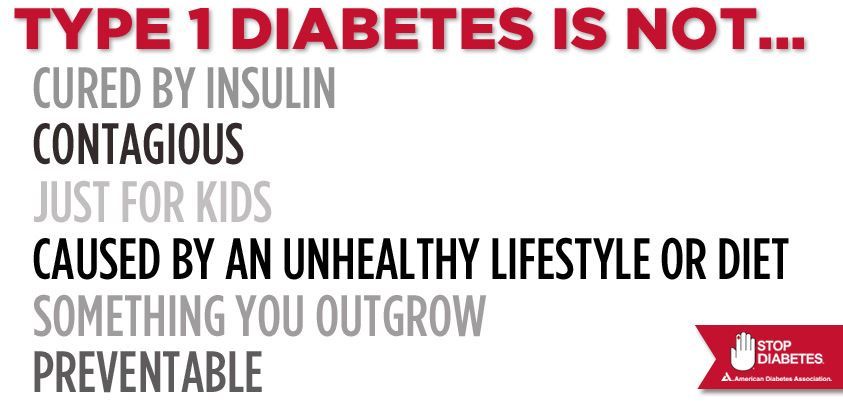
• The cost of caring for someone with diabetes is $1 out of every $5 in total healthcare costs.Now, there’s also a myth that, if you just “take good care” of yourself and have good control of your diabetes, that you won’t have any complications. This is, sadly, not always the case, because no matter how much a person with diabetes tries, things can go wrong even if you’re doing everything “right.” Sometimes your body just betrays you. That’s how it goes. That’s a lot of how diabetes happens in the first place: genetic predisposition generally plays a major role in Type 1, Type 1.5, AND Type 2. Environmental factors, including some types of viruses, also play a role, and there are also other things that can increase the risk of developing diabetes.
Having diabetes means you have, automatically, a higher risk of basically all the “big name” health problems, and it means you have a higher risk of depression.
Diabetes is serious. It’s not a death sentence, but it’s no walk in the park, either. It’s not a punchline for people who don’t have the disease to use to belittle those who do.
Reblogging myself since it is November again. This is year 17-going-on-18 of my life with type 1 diabetes.





 Kirkwall Was Totally Built On a Hellmouth