Tonight on Pinterest, I discovered the following Jane Austen quote from Persuasion:

“It sometimes happens that a woman is handsomer at twenty-nine than she was ten years before.”

While I will be using “handsomer” in a slightly different sense than the original quote, I can definitely that I am a handsomer woman at twenty-nine than I was at nineteen.

Put things in a safe place = place ends up so safe you can’t find it again later

Put things in a completely haphazard place = find them when you’re looking for the thing in the “safe” place

Rediscovered half my sharp object collection while looking for two pieces of wood for crafting.

Went to monthly festival thing. Wore bow tie and slicked my hair back (it looked epic, even if the heat eventually sort of wilted it).

Got approached by two flappers with flyers for an upcoming musical production of The Great Gatsby. The bow tie had definitely drawn them, as one told me, “*You* have *got* to come to Gatsby!”

And I will be. Because I am not passing up a chance at dappering up for something.

prokopetz:

That thing about how cats think humans are big kittens is a myth, y’know.

It’s basically born of false assumptions; folks were trying to explain how a naturally solitary animal could form such complex social bonds with humans, and the explanation they settled on is “it’s a displaced parent/child bond”.

The trouble is, cats aren’t naturally solitary. We just assumed they were based on observations of European wildcats – but housecats aren’t descended from European wildcats. They’re descended from African wildcats, which are known to hunt in bonded pairs and family groupings, and that social tendency is even stronger in their domesticated relatives. The natural social unit of the housecat is a colony: a loose affiliation of cats centred around a shared territory held by alliance of dominant females, who raise all of the colony’s kittens communally.

It’s often remarked that dogs understand that humans are different, while cats just think humans are big, clumsy cats, and that’s totally true – but they regard us as adult colonymates, not as kittens, and all of their social behaviour toward us makes a lot more sense through that lens.

The like to cuddle because communal grooming is how cats bond with colonymates – it establishes a shared scent-identity for the colony and helps clean spots that they can’t easily reach on their own.

They bring us dead animals because cats transport surplus kills back to the colony’s shared territory for consumption by pregnant, nursing, or sick colonymates who can’t easily hunt on their own. Indeed, that’s why they kill so much more than they individually need – it’s not for fun, but to generate enough surplus kills to sustain the colony’s non-hunting members.

They’re okay with us messing with their kittens because communal parenting is the norm in a colony setting, and us being colonymates in their minds automatically makes us co-parents.

It’s even why many cats are so much more tolerant toward very small children, as long as those children are related to one of their regular humans: they can tell the difference between human adults and human “kittens”, and your kittens are their kittens.

Basically, you’re going to have a much easier time getting a handle on why your cat does why your cat does if you remember that the natural mode of social organisation for cats is not as isolated solitary hunters, but as a big communal catpile – and for that purpose, you count as a cat.

mizufae:

whitmans-kiss:

walburgablack:

ravensrandoms:

slightlypsychic:

mademoiselleseraph:

I’d hate to be a party pooper, but as a Native woman, this all makes me seriously uncomfortable.

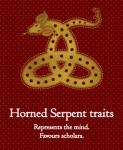
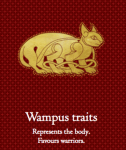
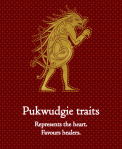
If the Hogwarts mascots were a lion, a snake, a badger, and a raven, all real animals, why do these new ones have to be religious creatures? Also, the Hogwarts houses all had fanciful made up names but these are legitimate names of creatures Indigenous peoples believed in. Doesn’t that seem a little ethnocentric to anyone?

And the whole “indigenous magic but i can’t say which tribe” bullshit? Seriously? No, it’s not like we aren’t all thrown into a cultural stereotype by white people all the damn time.

So glad I never got into Harry Potter, or this could have been heartbreaking.

If you ever wondered what cultural appropriation looks like, it looks kinda like this.

I don’t have any energy left to rant more about this entire shitbundle of “no, leave your hands outta my culture” that is Rowling’s new venture. So I’ll just second what other Native folks are saying.

ugh. Suddenly so glad we know jack about South Asian magic.

oh… oh no

I hesitate to even reblog this because the image content is so infuriating, but a significant portion of my dash is non-north american HP fans and has been quietly talking about this new content like it’s a fun game and not some of the most blood curdling appropriative bullshit I’ve seen. (On account of its scale and audience, that is.)

I won’t be talking about it and if I ever create fan works for HP this won’t be in my personal canon, and I’d like to ask y’all to think a little more carefully about it if you choose to interact with this extended content.

As a non-Native person, the best thing I think I can do is listen to the Native writers and artists who are responding to this, and who have already created incredible imaginary worlds and stories that don’t spit in the face of their religions and cultures.

The primary problem here that I am perceiving is the lack of voice they have, compared to the outsized and clearly ignorant voice of JKR. (And don’t give me that “she couldn’t have known any better” crap. Maybe in 1992. She could have hired representatives from many different tribes to consult with. It would have cost her equivalently nothing and given many cultures an awesome boost.) So in response my choice is to really listen to and respect the voices of the people who are actually affected by this. Use this as a chance to learn more about a culture you’re unfamiliar with; the awful things that have been done to them, the incredible resilience their cultures have brought, the beautiful and hilarious and heartbreaking stories they have to share, the breathtaking variety and breadth of differences inside what is often perceived as, but what is by no means a singular culture. If you come across a Native artist or writer in your online travels, please, pay attention. Give them the same attention you would give JKR, or more.