[image description]
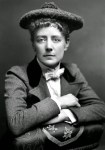
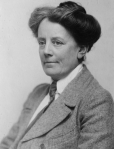
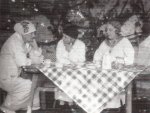
[Ethel Smyth, a dapper and butch-presenting woman, as a younger and an older woman.
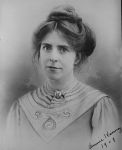
Annie Kenney, shown as a young woman.
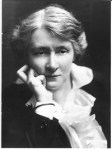
Edith Craig, posed with a thoughtful hand to her jaw and looking rather like a Byronic hero.
(From left) Edith Craig with her partners Clare “Tony” Atwood and Christabel Marshall St. John.
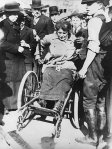
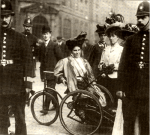
Rosa May Billinghurst, depicted at the center of two crowd scenes. In the first, she is wearing an overcoat and sitting in an old-fashioned wheelchair; in the second, she has a rather grand hat and is in her famous adaptive tricycle. ]
For @disabilityfest this year, I wanted to continue what I
started last year, making posts about historical figures who were disabled. It’s
been really important to me to know that my forebears existed, survived, and in
some cases thrived. In the historical record, disability erasure is a huge
issue: many historical figures’ disabilities aren’t talked about, or the
individuals are forgotten entirely.As an autistic bisexual woman, I’m very aware that sexuality
is also subject to historical erasure, often in much the same way. So I’ve
decided to focus especially on disabled historical figures who were also gay or
bisexual. For me, finding out about and researching historical people who
represent those important intersections in my identity has been very powerful,
and I hope my information can also benefit some of you.Today’s post is about disabled suffragettes! (trigger warning for brief mentions of police brutality).

 Kirkwall Was Totally Built On a Hellmouth