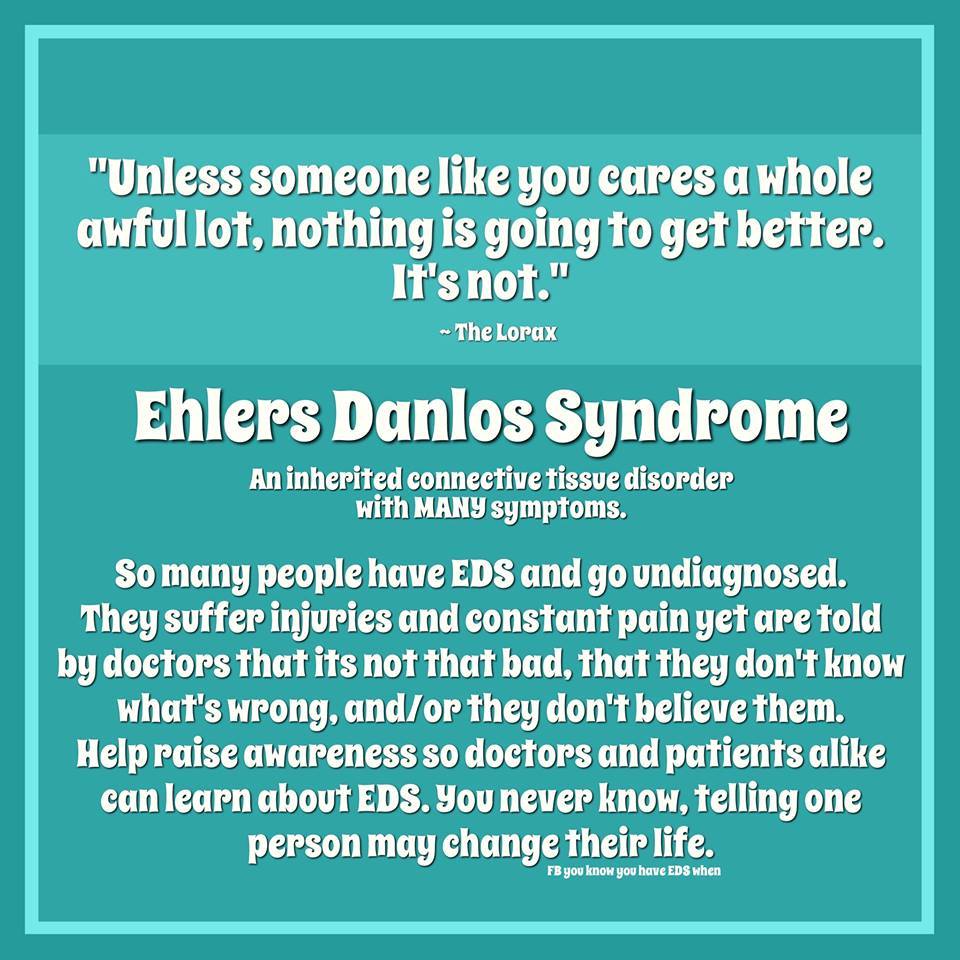
Ehlers-Danlos syndrome is a group of inherited disorders marked by extremely loose joints, hyperelastic skin that bruises easily, and easily damaged blood vessels.
There are six major types and at least five minor types of Ehlers-Danlos syndrome (EDS).
A variety of gene mutations (changes) cause problems with collagen, the material that provides strength and structure to skin, bone, blood vessels, and internal organs.
The abnormal collagen leads to the symptoms associated with EDS. In some forms of the condition this can include rupture of internal organs or abnormal heart valves.
Family history is a risk factor in some cases
Symptoms of EDS include:
Double-jointedness
Easily damaged, bruised, and stretchy skin
Easy scarring and poor wound healing
Flat feet
Increased joint mobility, joints popping, early arthritis
Joint pain
Very soft and velvety skin
- Vision problems
Treatment
There is no specific cure for Ehlers-Danlos syndrome. Individual problems and symptoms are evaluated and cared for appropriately. Frequently, physical therapy or evaluation by a doctor specializing in rehabilitation medicine is needed.
Expectations (prognosis)
People with EDS generally have a normal life span. Intelligence is normal.
Those with the rare vascular type of EDS are at significantly increased risk for rupture of a major organ or blood vessel.Picture credits : https://www.facebook.com/YouKnowYouHaveEdsWhen

 Kirkwall Was Totally Built On a Hellmouth